UAE Health Insurance for Expats 2026: What You Must Know
Disclaimer: Insurance regulations, costs, and policy terms change regularly. This article is for informational purposes only and does not constitute insurance or financial advice. Always consult a DHA-licensed insurance broker for tailored advice.
Introduction
Health insurance in Dubai is not optional — it is mandatory for all residents under UAE law, and employers are legally required to provide it. The challenge for most expats is not having insurance, but understanding what their insurance actually covers.
Basic employer plans are legal minimums. They leave significant gaps — particularly in dental, optical, specialist access, and coverage limits. This guide explains the mandatory structure, what typical employer plans miss, and how to top up your coverage affordably.
UAE Health Insurance: The Legal Framework
Dubai: The Dubai Health Authority (DHA) mandates insurance for all Dubai residents. The Essential Benefits Plan (EBP) sets minimum standards.
Abu Dhabi: The Health Authority Abu Dhabi (HAAD) mandates the Thiqa card for nationals and Basic Plan for expats — slightly different requirements from Dubai.
Other Emirates: Sharjah, Ajman, RAK — follow federal framework with varying enforcement.
Employer obligations in Dubai:
- Provide insurance for all employees effective from day 1
- Coverage must meet or exceed the DHA Essential Benefits Plan
- Must provide coverage for legal dependants (spouse, children under 18) — though some employers charge employees for dependent coverage
- Failure: AED 500/month fine per uninsured employee
What the Essential Benefits Plan (EBP) Covers
The EBP is the legal minimum. It includes:
Covered:
- Inpatient and day-case treatment
- Outpatient GP consultations (with co-pay)
- Emergency treatment (anywhere in UAE)
- Maternity — basic delivery and prenatal
- Mental health (basic)
- Pharmacy (formulary-restricted)
- Diagnostic tests (with referral)
Annual coverage limit: AED 150,000 (minimum under EBP)
Co-pay structure: Typically 20% of each consultation, capped at AED 500/year
Geographic coverage: UAE only (EBP does not cover international treatment)
What Most Employer Plans Miss
Even plans that exceed the EBP minimum often exclude or severely limit:
| Item | Typical Employer Plan Coverage |
|---|---|
| Dental | Not covered or AED 500 annual limit (extraction only) |
| Optical | Not covered |
| Pre-existing conditions | Excluded for 6–12 months |
| Maternity (private room, elective) | Basic delivery covered; upgrades not |
| Mental health (extended) | 5–10 sessions maximum |
| Physiotherapy | 6–10 sessions/year with prior auth |
| International coverage | Emergencies only or not at all |
| Specialist without referral | Requires GP referral chain |
| Annual limit | AED 150,000–500,000 (often inadequate for serious illness) |
Best Individual Top-Up Insurance Providers in UAE 2026
For expats wanting to fill coverage gaps:
Daman (National Health Insurance Company)
UAE's largest health insurer — extensive hospital network, Arabic and English service, comprehensive plans.
Individual plans from: AED 3,000–15,000/year
Known for: Wide hospital network, fast claims
Cigna Global
International health insurance specifically built for expats — worldwide coverage, no need to be in UAE for treatment, high annual limits.
Individual plans from: AED 6,000–20,000/year
Best for: Mobile expats who travel frequently and want international coverage
AXA Gulf
French-backed insurer with UAE operations — competitive mid-tier plans, good digital claims handling.
Plans from: AED 3,500–12,000/year
Allianz Care
Premium international health insurance — high annual limits (EUR 1–5 million+), strong for families, expatriate-specific products.
Plans from: AED 8,000–25,000/year
MetLife UAE
US-backed, competitive for family plans, strong dental riders available.
Plans from: AED 4,000–15,000/year
How to Choose the Right Level of Coverage
Single professional, healthy, under 40:
Your employer EBP or slightly enhanced plan is probably adequate for day-to-day needs. Consider adding: dental rider (AED 1,000–2,000/year) and optical rider (AED 500–800/year).
Couple or family:
Dental and optical become significantly more valuable with two adults. Maternity coverage essential if planning a family — note the 12-month waiting period on most plans.
Chronic condition or pre-existing health issue:
Invest in a comprehensive plan with declared pre-existing condition coverage. Budget AED 8,000–15,000/year for individual, more for family.
Senior expat (50+):
Premiums increase significantly with age. International plans that cover repatriation medical evacuation are worth including.
Cost Benchmarks (2026)
| Profile | Coverage Level | Annual Premium |
|---|---|---|
| Single, under 35, healthy | Basic top-up with dental | AED 3,000–5,000 |
| Single, 35–50 | Mid-tier with dental + optical | AED 5,000–9,000 |
| Couple, under 40 | Enhanced family plan | AED 10,000–16,000 |
| Family of 4 with children | Comprehensive | AED 18,000–32,000 |
| Senior (55+), individual | International plan | AED 15,000–35,000 |
Practical Tips for Getting the Most from Your UAE Insurance
Know your network: Obtain the list of in-network hospitals and clinics from HR before you need it. In-network visits are covered; out-of-network visits may not be.
Get pre-authorisation for elective procedures: Most insurers require prior authorisation for specialist referrals, surgery, physiotherapy, and certain diagnostics. Going without authorisation risks claim rejection.
Direct billing vs reimbursement: Most UAE private hospitals accept direct billing from major insurers (you pay co-pay only). Always confirm before your appointment. Out-of-network: you pay upfront and claim reimbursement — keep all receipts.
Dental separately: Dental is rarely adequately covered in employer plans. Budget AED 1,500–2,000/year for out-of-pocket dental for a single adult.
Frequently Asked Questions
Is health insurance mandatory in UAE?
Yes for all UAE residents. Employers in Dubai must provide it by law. Residents without employer-provided insurance (self-employed, freelancers) must obtain individual insurance to maintain residency.
What happens if I'm between jobs with no insurance?
Your insurance typically stops when your employment visa is cancelled. You are legally required to have insurance as a condition of UAE residency — self-employed individuals must obtain individual insurance. Visitor insurance covers the gap for short visits.
Can I use UAE insurance outside the UAE?
The EBP minimum covers emergencies internationally. Enhanced plans vary — check your policy. Cigna Global and Allianz Care specifically offer worldwide coverage as their primary feature.
Does UAE health insurance cover dental?
Rarely at a useful level on basic plans. Dental is the most common coverage gap. Budget AED 1,000–2,500/year for individual dental out-of-pocket if your plan doesn't include it.
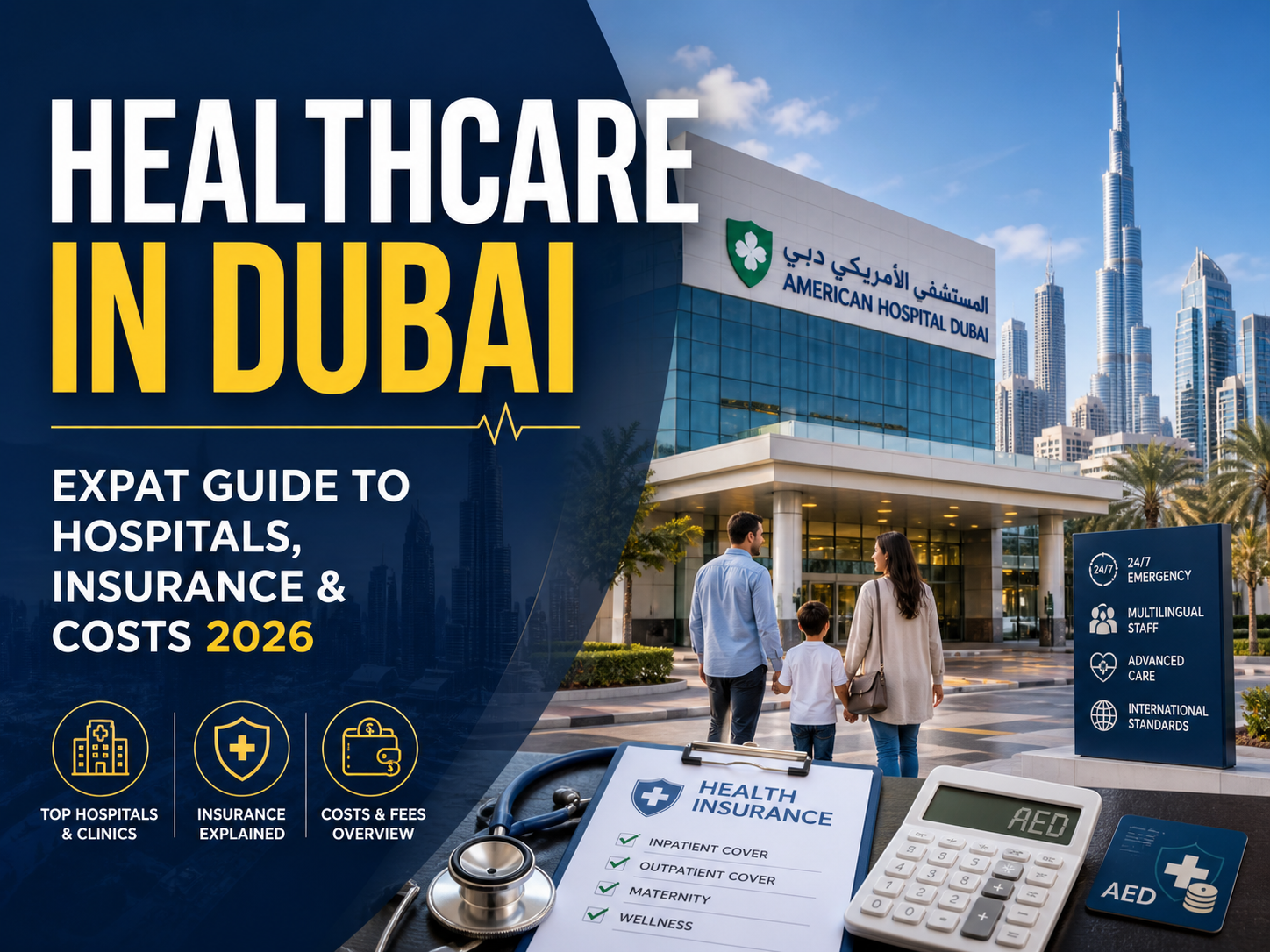
For how the healthcare system works: Healthcare in Dubai: Expat Guide → | Full expat guide: Moving to Dubai →