
Dubai Cost of Living 2026: Real Numbers for Every Budget
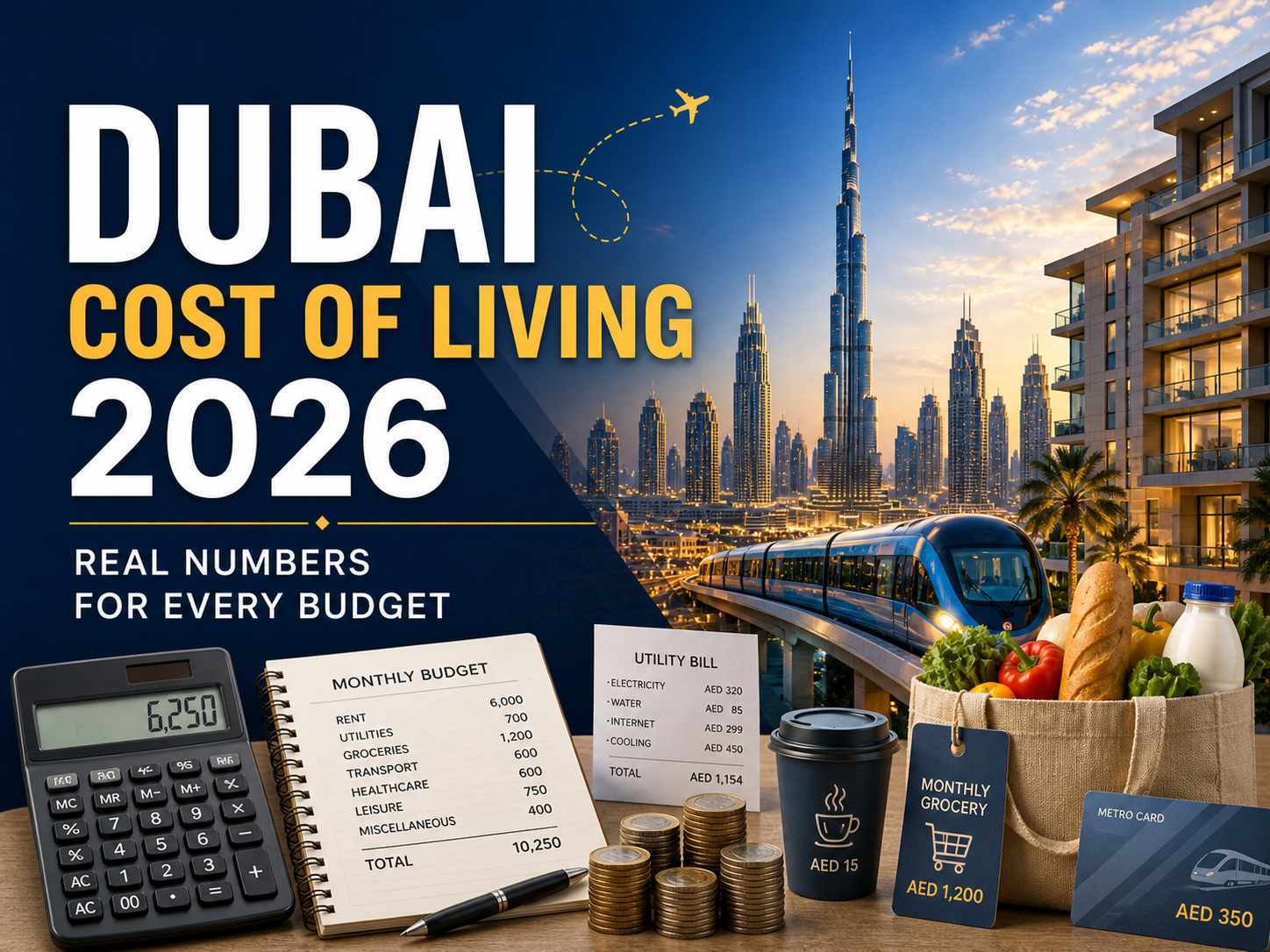
Data sources: Numbeo (January 2026), DMCC Cost of Living Report, community surveys. All prices in AED unless stated. AED 3.67 ≈ USD 1.
Introduction
Dubai has a reputation for being expensive. That reputation is half-earned. Some things genuinely cost more than comparable European or American cities — rent in premium areas, international school fees, and dining in hotel restaurants. Other things are cheaper than you'd expect — fuel, utilities, taxis, and casual eating out.
This guide gives you real 2026 figures, not vague ranges, so you can build an honest budget before deciding to move.
Quick Summary: Monthly Cost Benchmarks
| Profile | Minimum | Comfortable | Premium |
|---|---|---|---|
| Single professional | AED 7,000 | AED 11,000 | AED 20,000+ |
| Couple (no children) | AED 11,000 | AED 17,000 | AED 30,000+ |
| Family of 4 (with school) | AED 22,000 | AED 32,000 | AED 55,000+ |
These are monthly totals including rent, food, transport, utilities, and basic lifestyle.
Rent: The Biggest Variable
Rent dominates the Dubai budget. Unlike most countries, annual leases are paid upfront via post-dated cheques (1–4 cheques per year). Monthly rent is possible but uncommon and comes at a premium.
Apartment Rental Prices (Annual, 2026)
| Area | Studio | 1-Bed | 2-Bed | 3-Bed |
|---|---|---|---|---|
| Dubai Marina / JBR | 65–90K | 90–130K | 130–180K | 180–250K |
| Downtown Dubai | 70–100K | 100–150K | 150–220K | 220–350K |
| Business Bay | 55–80K | 80–120K | 120–170K | 160–220K |
| JVC (Jumeirah Village Circle) | 35–55K | 50–80K | 75–110K | 100–140K |
| Al Barsha | 40–60K | 60–85K | 85–120K | 110–150K |
| Mirdif | 30–45K | 45–65K | 65–90K | 90–130K |
| Deira / Old Dubai | 25–40K | 40–60K | 55–80K | 75–100K |
Key point: JVC and Mirdif offer the best value for money with reasonable commute times. Marina and Downtown carry a lifestyle premium.
For area-by-area lifestyle comparisons: Best Areas to Live in Dubai →
Food: Groceries and Eating Out
Groceries (Monthly)
- Single person: AED 600–1,000
- Couple: AED 900–1,500
- Family of 4: AED 1,500–2,500
Supermarket options by budget:
- Budget: Carrefour (Value line), Union Coop, LuLu Hypermarket
- Mid-range: Spinneys, Waitrose (select items), Carrefour main range
- Premium: Waitrose, Organic Foods & Café, Jones the Grocer
Local produce and Asian/Middle Eastern groceries are affordable. Imported Western brands (specific cheeses, wines, specialty items) are expensive.
Eating Out (Per Person Per Meal)
| Setting | Cost |
|---|---|
| Cafeteria / shawarma | AED 10–25 |
| Casual restaurant | AED 35–75 |
| Mid-range restaurant | AED 80–180 |
| Fine dining | AED 200–500+ |
| Friday brunch | AED 200–500 (often includes drinks) |
Delivery apps (Talabat, Deliveroo, Noon Food) are widely used — expect AED 50–100 for a delivered meal for one.
Transport
Car Ownership
Fuel is subsidised — petrol costs approximately AED 2.99 per litre for Super 98 (2026 figure, adjusted quarterly). Running a car in Dubai is significantly cheaper than Europe.
Monthly car costs (mid-range car, 1,500km/month):
- Fuel: AED 250–400
- Insurance: AED 100–250
- Car loan payment (if financed): AED 1,000–2,500
- Salik (toll) charges: AED 50–200 depending on routes
- Parking: AED 0–300 (most residential buildings include parking)
Total monthly running cost (excluding loan): AED 400–1,000
Public Transport
The Dubai Metro is excellent and affordable. A Nol Silver Card (standard) has a fare cap of AED 20/day. Monthly commuters spending AED 5–8 per trip, twice daily: approximately AED 300–500 per month.
Taxis: AED 12–40 for typical city trips. Careem/Uber comparable.
Utilities
DEWA (Dubai Electricity and Water Authority) bills are metered and vary significantly with AC usage.
| Season | Monthly DEWA (1BR Apartment) |
|---|---|
| Winter (Nov–Mar) | AED 200–400 |
| Summer (Jun–Sep) | AED 500–1,200 |
Internet: AED 300–500/month for home fibre (du or Etisalat, 500Mbps–1Gbps).
Mobile plan: AED 100–250/month for unlimited data.
Healthcare
Health insurance is mandatory. What you pay depends on whether your employer covers it (usually they do by law) and what your top-up costs.
Employer-provided basic insurance: AED 0 to you (employer-paid).
Individual/family top-up insurance: AED 3,000–12,000/year depending on coverage level and age.
GP visit co-pay (with insurance): AED 20–50.
Specialist visit co-pay: AED 40–100.
Dental (usually not fully covered): AED 200–800+ per treatment.
International Schools
This is the single largest discretionary expense for families in Dubai.
| Curriculum | Annual Fee Range |
|---|---|
| British (GCSE/A-Level) | AED 35,000–95,000 |
| American (AP/SAT) | AED 40,000–90,000 |
| IB (International Baccalaureate) | AED 50,000–100,000+ |
| Indian (CBSE/ICSE) | AED 10,000–35,000 |
| French (AEFE) | AED 40,000–70,000 |
Most schools charge registration fees (AED 1,000–3,000) and bus fees separately (AED 5,000–10,000/year).
Entertainment and Lifestyle
| Item | Monthly Cost |
|---|---|
| Gym membership | AED 200–600 |
| Cinema (2 tickets, 2x/month) | AED 120–200 |
| Streaming services (Netflix, OSN+, etc.) | AED 80–150 |
| Beach club day pass (once/month) | AED 100–400 |
| Friday brunch (once/month) | AED 200–500 |
| Domestic travel (UAE weekends) | AED 0–800 |
Sample Monthly Budgets
Budget: Single Professional (JVC, 1BR, Public Transport)
| Item | AED/month |
|---|---|
| Rent (1BR, JVC) | 5,500 |
| Groceries | 700 |
| Eating out | 600 |
| Transport (Metro + occasional taxi) | 400 |
| Utilities | 450 |
| Phone + internet | 300 |
| Health insurance top-up | 200 |
| Entertainment | 500 |
| Total | 8,650 |
Comfortable: Couple (Business Bay, 2BR, 1 Car)
| Item | AED/month |
|---|---|
| Rent (2BR, Business Bay) | 12,000 |
| Groceries | 1,300 |
| Eating out | 2,000 |
| Car (running costs + loan) | 3,000 |
| Utilities | 600 |
| Phone + internet | 500 |
| Health insurance (couple) | 600 |
| Entertainment / lifestyle | 2,000 |
| Total | 22,000 |
Family of 4 (Dubai Hills, 3BR Villa, 2 Kids in British School)
| Item | AED/month |
|---|---|
| Rent (3BR, Dubai Hills) | 18,000 |
| Schools (2 children, British) | 10,000 |
| Groceries | 2,200 |
| Eating out / entertainment | 3,500 |
| 2 cars | 5,000 |
| Utilities | 1,000 |
| Health insurance (family) | 1,500 |
| School bus / extracurriculars | 1,500 |
| Total | 42,700 |
Frequently Asked Questions
What salary do you need to live comfortably in Dubai?
A single professional needs AED 12,000–15,000/month to live comfortably in a decent area with a modest lifestyle. A couple needs AED 20,000+. A family of four with two children in international schools realistically needs AED 40,000–50,000/month.
Is Dubai more expensive than London?
On rent, it depends on the area. A comparable apartment in Dubai Marina vs Central London — Dubai is often cheaper. But premium Dubai lifestyle (brunches, beach clubs, international schools) adds costs that push total expenditure above London for families.
Is there income tax in Dubai?
No personal income tax for employees. Corporate tax of 9% applies to businesses earning above AED 375,000 profit. VAT of 5% applies to most goods and services.
How much does a car cost in Dubai?
A new entry-level car (Toyota Yaris, Mitsubishi Attrage) starts at around AED 45,000–55,000. A mid-range car (Toyota Camry, Nissan Altima) runs AED 75,000–120,000. Financing is widely available at 2.5–4% annual rates.
Full relocation guide: Moving to Dubai: The Complete Expat Guide →