Moving to Dubai: The Complete Expat Guide [2026]
Disclaimer: This guide is for general informational purposes. Visa regulations, costs, and legal requirements change. Always verify current rules with the UAE government’s official ICP portal and a qualified legal or financial adviser before making relocation decisions.
Introduction
Dubai is home to over 3.5 million expatriates — roughly 90% of the total population. People move here for tax-free income, career acceleration, lifestyle, and the unique energy of a city that has built itself into a global hub within a single generation. But the reality of moving to Dubai differs significantly from the Instagram version.
This guide is written for people making a real decision, not a fantasy one. It covers what the process actually looks like, what it costs, what to sort before you arrive, and what surprises most new expats in their first months.
Is Dubai the Right Move for You?
Before logistics, the honest questions:
Dubai works well for you if:
- You have a job offer or a clear plan to generate income (savings to survive a 3–6 month job search)
- You can handle a contract-based residency system (no path to citizenship; residency is tied to employment, business ownership, or property)
- You’re comfortable with a tax-free income structure but understand VAT (5%) and corporate tax (9% above AED 375,000 profit) applies to businesses
- You can adapt socially to a city where your neighbour, doctor, and colleague are likely from different countries
Dubai is harder if:
- You’re counting on casual, unsponsored work (the grey freelance market is smaller than it appears online)
- You have strong attachments to home and find the 2–3 year residency renewal cycle stressful
- You expect European-style employment rights (UAE labour law is different — understand your contract before signing)
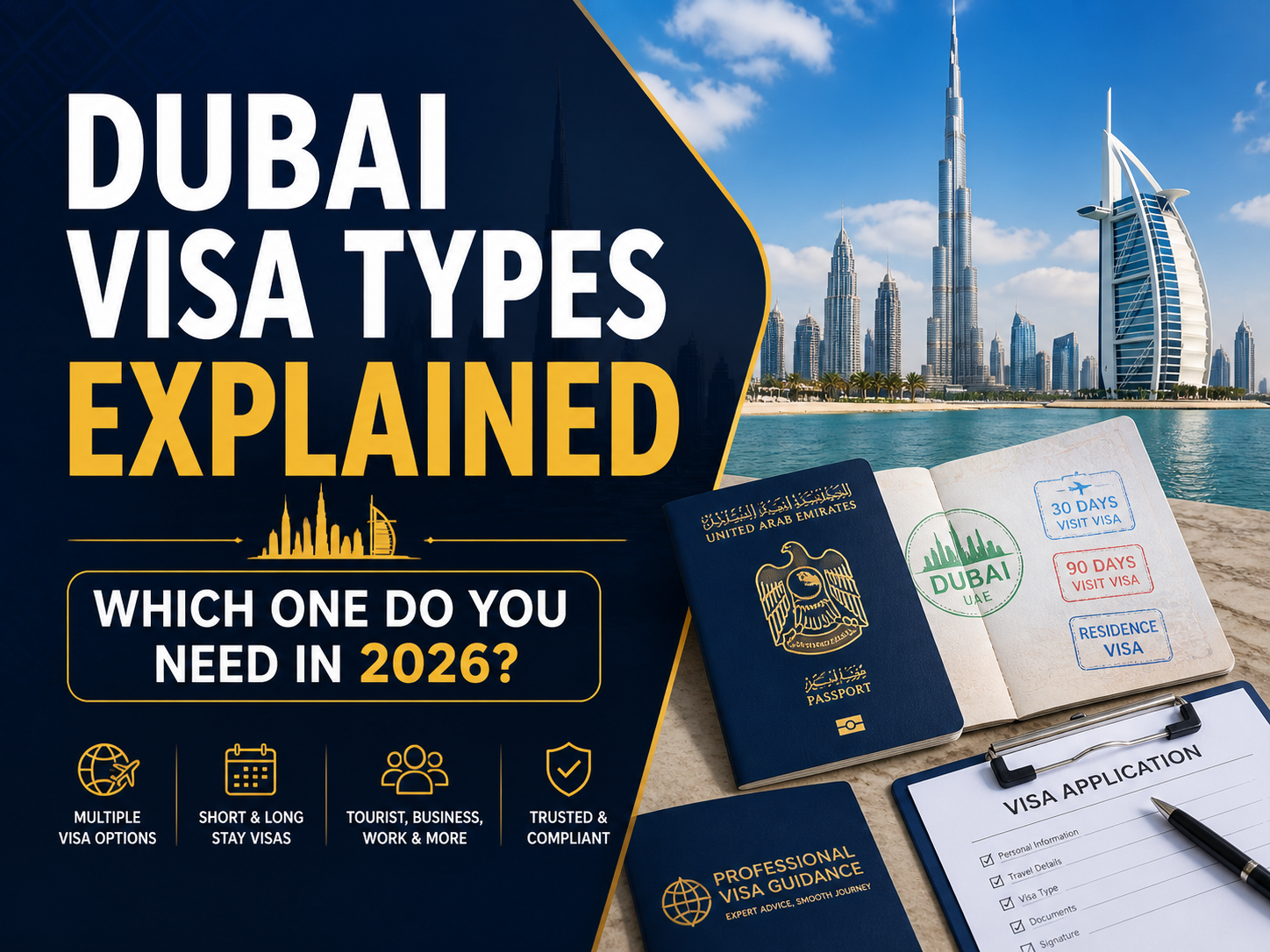
Dubai Visa Options for Expats
Your residency visa is the foundation of your Dubai life. Everything else — bank account, school enrolment, health insurance, renting an apartment — depends on it.
Employment Visa
The most common route. Your employer sponsors your visa, covers the fees, and processes your Emirates ID. Valid typically for 2–3 years, renewable. Tied to the employer — changing jobs requires a visa transfer or cancellation and new application.
What you need: Job offer from a UAE-registered company. Your employer does most of the work.
Freelancer / Independent Professional Visa
Available through designated free zones (TECOM, DMCC, Dubai Media City, Dubai Internet City, and others). You obtain a freelancer permit from the free zone, which then sponsors your residency visa.
Cost: AED 7,500–20,000 per year depending on free zone and whether you need a physical office. See our [Business Setup in Dubai guide →] for a detailed breakdown.
Investor / Partner Visa
If you own a UAE-registered company (mainland or free zone), you can sponsor your own visa as a company owner/partner. Requires a valid trade licence.
Property Investor Visa
Own property in Dubai worth AED 750,000+: eligible for a 2-year renewable investor visa. Own AED 2 million+: eligible for the 10-year Golden Visa. See our Buying Property in Dubai guide → for details.
Golden Visa (10 Years)
Long-term residency for investors, skilled professionals, entrepreneurs, and exceptional talents. Does not require an employer sponsor. Eligible categories expanded significantly in 2022–2024 and include doctors, engineers, scientists, and senior executives.
Before You Arrive: The Checklist
3 Months Before
- [ ] Confirm your visa route and begin paperwork with your employer or free zone
- [ ] Research neighbourhoods — shortlist 2–3 areas based on commute and lifestyle (see Best Areas to Live in Dubai →)
- [ ] Get your documents attested/notarised if required (degrees, marriage certificates)
- [ ] Check your health insurance situation — coverage must begin before or at arrival
- [ ] Open an international transfer account (Wise or Revolut) for moving money during the transition
1 Month Before
- [ ] Book short-term accommodation for your first 2–4 weeks (serviced apartments, not a hotel, to control costs)
- [ ] Research UAE bank requirements and prepare documents (passport, visa copy, Emirates ID — you can’t open a bank account without an Emirates ID, so this happens after arrival)
- [ ] Arrange medical checks if your employer requires a pre-employment health certificate
First Week in Dubai
- [ ] Complete your medical fitness test (required for visa processing)
- [ ] Apply for your Emirates ID at an ICP centre
- [ ] Get a UAE SIM card (du or Etisalat) — you’ll need this for virtually everything
- [ ] Set up temporary transport (Careem/Uber while you figure out if you need a car)
Housing: How Renting Works in Dubai
Dubai’s rental market operates very differently from most Western countries.
The Cheque System
Most landlords require payment upfront via post-dated cheques — typically 1, 2, or 4 cheques covering the full annual rent. Monthly rent is the exception, not the rule, and usually commands a premium. If you don’t have a UAE bank account yet, this can create a chicken-and-egg problem in your first weeks.
Practical solution: Use a short-term furnished apartment for your first 1–2 months while your Emirates ID processes and your bank account opens. This costs more per month but avoids the cheque commitment before you know the city.
Typical Rental Costs (2026)
| Area | Studio | 1BR | 2BR | 3BR |
|---|---|---|---|---|
| Dubai Marina / JBR | AED 65–90K | AED 90–130K | AED 130–180K | AED 180–250K |
| Downtown Dubai | AED 70–100K | AED 100–150K | AED 150–220K | AED 220–350K |
| Business Bay | AED 55–80K | AED 80–120K | AED 120–170K | AED 160–220K |
| Jumeirah Village Circle | AED 35–55K | AED 50–80K | AED 75–110K | AED 100–140K |
| Mirdif | AED 30–45K | AED 45–65K | AED 65–90K | AED 90–130K |
| Jumeirah / Umm Suqeim | — | AED 90–130K | AED 140–200K | AED 180–280K |
Prices in AED per year. Figures are approximate mid-range for unfurnished units.
Agent Fees
Expect to pay a real estate agent fee of 5% of annual rent (standard). DEWA (electricity and water) deposit of AED 2,000–4,000. Security deposit of 5% (unfurnished) or 10% (furnished) of annual rent.
Full upfront cost for a 1BR apartment: typically AED 15,000–30,000 in deposits and fees on top of your first cheque.
For a deeper breakdown by neighbourhood: Best Areas to Live in Dubai →
For real cost of living numbers: Dubai Cost of Living 2026 →
Opening a Bank Account in Dubai
You cannot open a UAE bank account without your Emirates ID. The Emirates ID takes 2–6 weeks to process after your visa is stamped. Plan for this gap.
Major banks for expats: Emirates NBD, HSBC UAE, Mashreq, First Abu Dhabi Bank (FAB), RAKBANK, Standard Chartered.
What you’ll need: Emirates ID, passport with UAE visa stamp, salary certificate or employment letter (for salaried accounts), proof of address (DEWA bill or tenancy contract).
Minimum salary requirements: Many banks require AED 5,000–10,000 minimum monthly salary for standard current accounts. Some (like Mashreq Neo and Liv. by Emirates NBD) have lower or no minimum requirements and are digital-first.
Once your account is open, consider applying for a credit card — the UAE credit card market is excellent for expats. Best Credit Cards UAE 2026 →
Healthcare and Insurance
Health insurance is mandatory for all Dubai residents. Your employer is required by law to provide it — but check what’s actually covered before relying on it.
Employer-provided insurance often has limits on pre-existing conditions, vision, dental, and specialist referrals. Read the policy document.
Top-up or supplementary insurance is worth considering for families, especially if you want direct specialist access without GP referral requirements.
Health insurance options and costs: UAE Health Insurance for Expats → (link coming soon)
Schools in Dubai
Dubai has an extensive international school system with British, American, IB, Indian (CBSE), and other curricula. The Knowledge and Human Development Authority (KHDA) inspects and rates all schools — check their published ratings before choosing.
Key numbers:
- British curriculum schools: AED 35,000–95,000 per year
- American curriculum schools: AED 40,000–90,000 per year
- Indian curriculum (CBSE): AED 10,000–35,000 per year (most affordable)
School fees are usually paid termly (3 terms). Most good schools have waiting lists — register as soon as your move is confirmed.
Sending Money Home
With no income tax, many expats send a significant portion of their salary home each month. UAE banks charge high international transfer fees (AED 25–100+ per transfer plus poor exchange rates).
Better options:
- Wise (formerly TransferWise): Mid-market exchange rate, low flat fees. Best for regular transfers.
- Remitly: Competitive rates especially for India, Pakistan, Philippines remittances.
- Western Union / Al Ansari Exchange: Good for cash pickup options in destination country.
SIGN UP FOR WISE — FIRST TRANSFER FREE
Dubai Cost of Living: Quick Summary
A single professional in Dubai needs AED 8,000–12,000/month to live comfortably (rent in a mid-range area, eating out occasionally, maintaining a car). A family of four needs AED 20,000–35,000/month with school fees.
For the full breakdown by category: Dubai Cost of Living 2026 →
Social Life and Community
Dubai is unusually easy for expat socialising. The city is built around social infrastructure — brunch culture, beach clubs, sports leagues, running groups, and an active events calendar. The challenge is that the expat community has high turnover — people leave every 2–3 years. Building deep friendships takes more active effort than in a stable home-country city.
Most expats find their social footing through: workplace colleagues, building/community groups, sports clubs (cricket leagues, football 5-a-side, running groups), and Facebook expat community groups (Dubai Expats, Dubai Mums).
Frequently Asked Questions
Do I need to speak Arabic to live in Dubai?
No. English is the working language of business, government services, healthcare, and daily life. You will function completely without Arabic. Learning basic phrases is appreciated but never expected.
Can my family join me?
Yes. Once you have your residency visa, you can sponsor your spouse and children under 18. Parents can be sponsored under specific conditions. Sponsoring a domestic worker (nanny, housekeeper) requires a separate permit.
How long does it take to settle in?
Most expats report feeling settled by month 3–4. The first 6–8 weeks involve administrative tasks (Emirates ID, bank account, driving licence, school registration) that can feel overwhelming. It passes.
Is it easy to leave Dubai if it doesn’t work out?
Relatively yes — but clear your bank accounts, cancel credit cards, return rented accommodation with proper notice, and ensure your employer processes your visa cancellation correctly. Outstanding financial obligations can prevent departure (immigration hold). Don’t leave loose ends.
Can I buy property as an expat?
Yes, in designated freehold zones. Full details: Buying Property in Dubai →
What is the Golden Visa and do I qualify?
The Golden Visa is a 10-year renewable residency for investors (AED 2M+ property), entrepreneurs, exceptional talents, and certain skilled professionals. Eligibility was expanded significantly in 2022. Check the ICP website for the current category list.
This guide is reviewed annually. Last updated May 2026.
For financial decisions, consult a qualified UAE-licensed financial advisor.